
Fragile item courier for valuable and delicate goods
Artwork, antiques, instruments, glass and expensive equipment travel in one dedicated van, handled by one driver, loaded once and unloaded once. No conveyors, no sorting hubs and no unexplained stops between collection and delivery.
- No conveyors or sorting hubs
- Secured and padded in the van
- Photos at collection and delivery
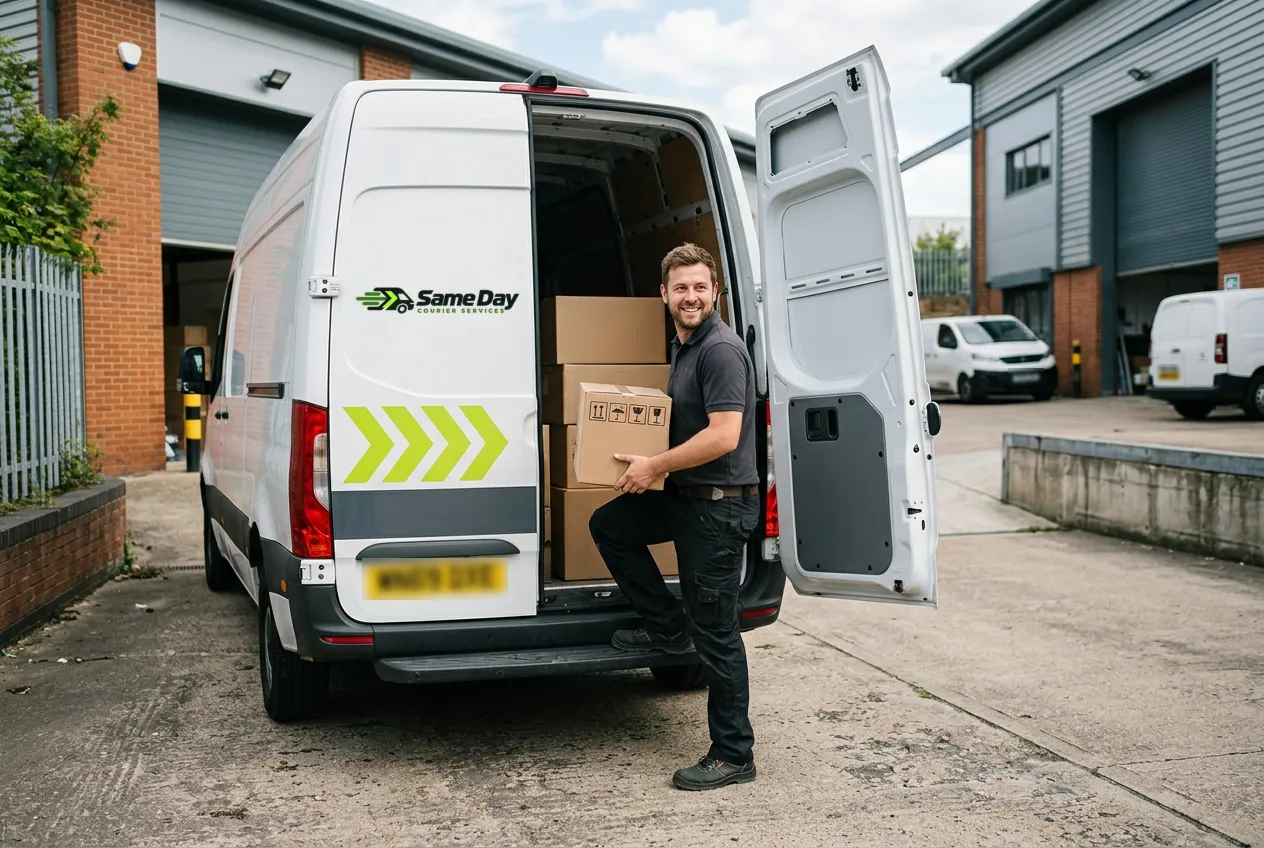
Why fewer touches means less damage
Most damage to fragile goods does not happen on the road. It happens when the item is handled: lifted off a cage, dropped onto a conveyor, sorted by machine, stacked under heavier parcels, then loaded onto another vehicle. A parcel network might do that several times between your door and the recipient's.
A dedicated van removes almost all of it. Your item is loaded once at collection, travels directly to the delivery address and is unloaded once. The same driver handles it from start to finish, knows what it is and knows how it needs to sit. Our comparison of dedicated couriers and parcel networks explains the difference in more detail.
That matters for an oil painting going from a studio in Bristol to a gallery in Mayfair, a 19th-century clock bought at auction in Edinburgh, a laboratory microscope moving between university buildings, or a set of hand-blown glass pieces for a hotel lobby in Manchester.
How items are secured in the van
The driver plans the load around your item rather than fitting it in around other people's parcels, so it is positioned, padded and strapped to the van's tie-down points before the doors close. That stops it sliding or tipping under braking, and keeps it clear of anything else in the load. In practice:
- Position: heavy, flat-bottomed items sit on the floor against the bulkhead; tall items are strapped upright to the side rails; framed works usually travel on edge, not flat.
- Padding: removal blankets protect surfaces from rubbing and minor knocks.
- Restraint: straps attach to the van's tie-down points so the item cannot slide or tip under braking.
- Separation: nothing is stacked on or leaned against a fragile item unless you have said it is safe.
If the item has orientation rules, such as "this way up", "keep upright" or "do not lay flat", tell us at booking and mark the packaging too.
Packing is your responsibility
Careful driving and good securing cannot make up for weak packing. Glass, ceramics, framed pictures, sculpture and delicate mechanisms need packing that will cope with a sudden stop on the M1.
Good packing for fragile goods means a rigid outer box or crate, plenty of cushioning on all sides, corner protectors for frames, and no empty space for the item to move into. Antique furniture may need its glass doors removed or taped, and loose parts such as finials or keys packed separately. Our guide on how to package fragile items for a courier walks through it.
Check your cover before you book
Some goods in transit policies limit or exclude certain categories, and poor packing can affect a claim. Tell us the item, its value and how it is packed when you ask for a quote.
Declare the value before booking
Goods in transit cover comes as standard on every job. Cover limits and exclusions are set out in our terms, and for valuable items the standard cover may not be enough. Tell us the value when you ask for a quote and we will confirm whether it is covered, or arrange additional cover for high-value goods before the job goes ahead.
Do this before booking, not when the driver arrives. Arranging extra cover can take a little time, and it is much easier to sort out in advance than at a gallery door with a van waiting.
Get a quote for this jobor call 020 4525 2039, any time
White glove style placement, where agreed
Some deliveries need more than a handover at the door: a framed print hung, an antique cabinet carried into a particular room, packaging removed and taken away. This kind of white glove delivery is possible on some jobs, but only where it has been agreed at booking.
Whether it can be done depends on the size and weight of the item, the stairs and doorways at the delivery address and how many people are needed. A single driver can place a boxed sculpture on a table; a marble-topped sideboard going to a second-floor flat needs more planning. Tell us exactly what you need doing at the delivery end and we will be honest about what is realistic. For bulky items, see our large item courier page for measuring and access tips.
Photos at collection and delivery
On fragile and high-value jobs, the driver photographs the item at collection, showing its condition and packing, and again at delivery before the recipient signs. Those photos sit with the signed proof of delivery, including the recipient's name and the time.
That record helps everyone. If a recipient notices a mark, you can see whether it was there before collection. You also receive live updates during the job, so you know when the item has been collected and when it is on its way. More on what a proof of delivery contains is in our guide to proof of delivery.
Items we regularly carry
- Artwork and framed pieces: paintings, prints, photography and sculpture, for artists, galleries, framers and private buyers.
- Antiques: clocks, furniture, ceramics and glass, often from auction houses and dealers.
- Musical instruments: cased guitars, cellos, keyboards and orchestral percussion for musicians, schools and repairers.
- Technical and scientific equipment: microscopes, measuring instruments and AV kit. For laptops, servers and data media, see our IT equipment courier page.
- Production and event pieces: props, display items and set pieces. Our film and TV production courier and events and exhibitions courier pages cover set and venue timings.
We do not carry cash, bullion or other goods that require armed or cash-in-transit security, and we do not offer house removals.
FAQ
Common questions
Is my high-value item insured in transit?
Goods in transit cover comes as standard on every job, but cover limits and exclusions are set out in our terms, and some categories, such as antiques, artwork and electronics, may be limited or excluded. Tell us the value before you book, not on the day, and we will confirm whether the standard cover applies or arrange additional cover for high-value goods. Keep a valuation or invoice in case you need it.
Who is responsible for packing a fragile item?
You are, unless something different has been agreed in writing. The driver will blanket-wrap and strap items in the van, which protects against scuffs and movement, but it does not replace proper packing for glass, ceramics, framed pictures or delicate mechanisms. Our guide to packaging fragile items explains what works. Badly packed goods can affect a claim, so take care with this step.
What does white glove delivery mean?
In the courier trade, white glove delivery usually means extra care at the delivery end: carrying the item inside, placing it where you want it, unwrapping it and taking the packaging away. With us, those steps happen only where they have been agreed at booking, because they depend on the item, the building and how many people are needed. Ask, and we will tell you what is possible for your job.
Can you carry a cello, a double bass or a guitar collection?
Yes. Instruments travel well in a dedicated van as long as they are in a hard case or a well-padded soft case, laid or stood as you instruct, and strapped so they cannot move. Tell us whether the instrument must stay upright or away from heat. For valuable instruments, declare the value when booking so we can confirm cover.
Will you take photographs of my item?
Yes. The driver photographs the item at collection, showing its condition and packing, and again at delivery before the recipient signs. Those photos are kept with the signed proof of delivery, so if anyone later questions the condition of the item there is a clear record of how it looked at both ends.
Can a gallery or auction house release an item directly to your driver?
Usually, yes. Arrange the release with the gallery or auction house in advance, give them the booking details, and tell us any reference number or ID they will ask for. Some venues have set collection times or loading rules, so share those with us when you book so the driver arrives at the right entrance and time.
Last updated