
Construction courier for urgent site deliveries
When a merchant can't deliver until later in the week and the gang is standing idle, we send a van to collect the shortfall and bring it to your gate, booked into your delivery slot and briefed on your site rules.
- Fixings, tools and hire kit to site
- Delivered to your booked slot
- Drivers briefed on your site rules
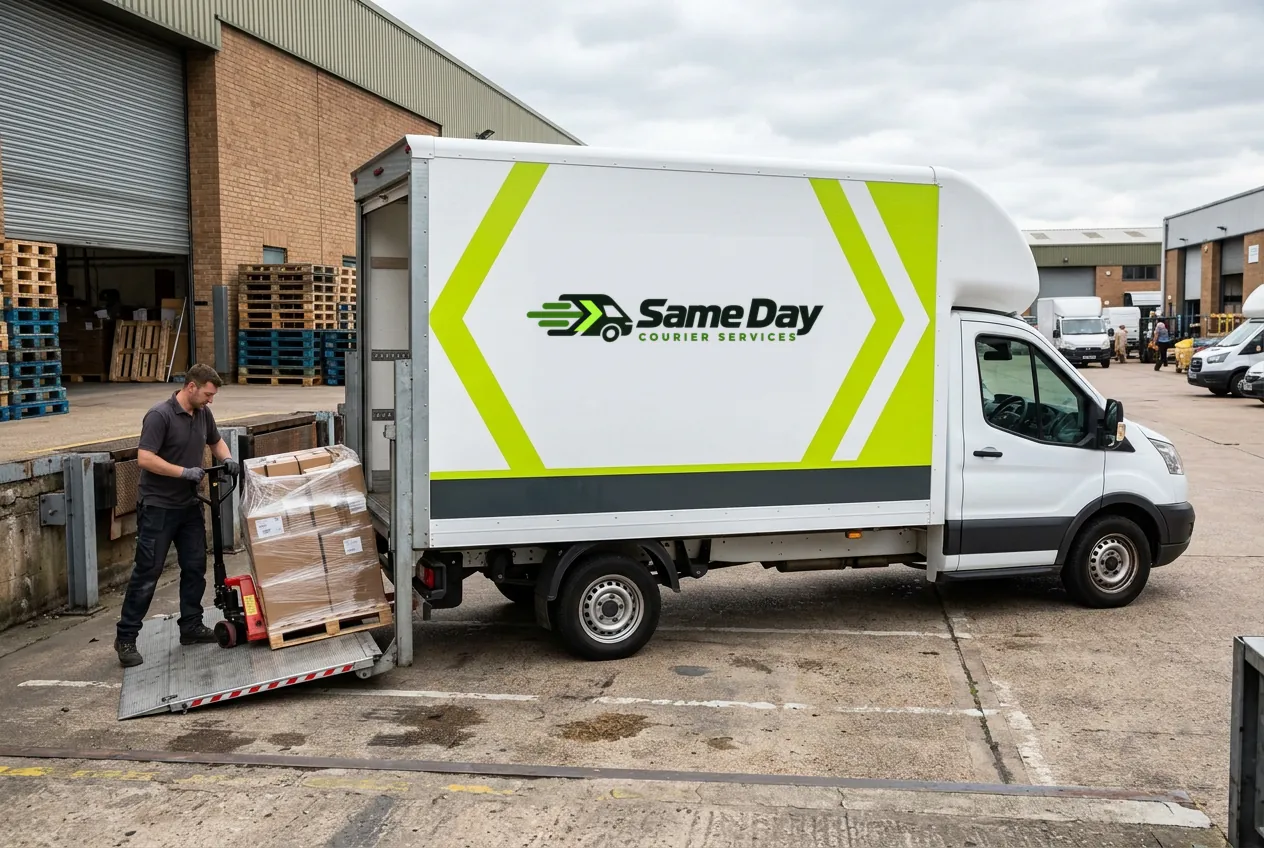
Before the van sets off: what your site needs to tell us
Construction deliveries fail at the gate more often than on the road. A van that arrives outside its slot, at the wrong entrance, or with a driver who has not been told the PPE rules can be sent away, and the fixings you were waiting for go back down the motorway.
So we ask more questions up front than a parcel carrier would. Give us these at booking and the job is planned around your site, not just the postcode:
Site details we need
- The delivery gate. Large sites often have one entrance for vehicles that the postcode does not reach, so a dropped pin helps
- The booked delivery slot and any reference from your delivery management system
- Times the site refuses deliveries, such as conditions in a construction logistics plan around school-run hours
- PPE and induction rules for visiting drivers
- How the load comes off: by hand, forklift, telehandler or tail lift
- Whether a banksman is needed for the van to reverse or move on site
- A named contact on site with a mobile number
Tell us the site rules and we will brief the driver and confirm they can meet them. If a requirement is something we cannot meet, you hear it before booking, not at the gate.
Jobs we are booked for on site
Most of our construction work is a shortfall or a breakdown rather than a planned materials drop. A few examples of the calls we get:
- Fixings and consumables. The second-fix team runs out of a particular screw, anchor or sealant mid-morning, and the merchant's own lorry is booked up until Thursday.
- Hire equipment. A replacement breaker or pump from the hire depot when one fails, or an off-hire collection back to the depot so you stop paying for it.
- Small plant within van payload. Plate compactors, mixers, generators and cutting saws, loaded by tail lift or forklift where they are too heavy to lift by hand.
- Plant repair parts. A hydraulic hose or filter from the dealer so the excavator is working again by the afternoon.
- Drawings and documents. Revised drawing sets, signed contracts or urgent documents to a site office.
- Concrete test cubes. Cubes collected from site and taken to the testing laboratory, packed so they do not shift.
- M&E kit. Boilers, cylinders, distribution boards and fan units for a plant room that is waiting on one item.
What fits in a van, and what doesn't
Length and weight are the two limits on site work. A van's payload is what remains after its own weight, the driver and fuel, so a "3.5-tonne van" carries far less than 3.5 tonnes.
| Material | Typical vehicle | Notes |
|---|---|---|
| Timber at 2.4 m or 3.0 m | LWB van | Load length is typically about 3.4 m |
| Timber at 3.6 m, door sets, long trunking | Luton van | Load length is typically about 4.0 m |
| 4.8 m and 6 m timber, steel and scaffold tube | Not suitable | Needs a flatbed lorry, which we do not run |
| 8 x 4 sheet materials | LWB or Luton | Weight adds up quickly: a pack of plasterboard can reach a van's payload |
| Bagged cement or aggregate on a pallet | Luton or LWB | A full pallet can exceed a tail lift's rating, so plan a forklift |
| Small plant and tools | SWB to Luton | Tell us the weight and whether it is on wheels |
These are typical figures; exact load space and payload depend on the vehicle model, and we confirm at booking. The van size guide has the dimensions for each class. Anything that needs a crane to offload is outside what we do, because we do not run HIAB vehicles.
On arrival at the gate
The driver reports to the gate or security cabin, quotes your booking reference and follows the site's instructions from there. On most sites that means staying in or beside the cab, moving only with a banksman, and unloading in the marked area.
Proof of delivery records the name of the person who signed, the time and, where it helps, a photo of the goods where they were left. That photo is useful when materials go into a compound and the person who ordered them is on another floor.
If a site holds the van well beyond the agreed time, waiting time may apply; we agree how that works when you book. For drawings or parts that must be on site before the morning shift, early-morning delivery avoids the rush-hour run entirely. Bulky one-off items such as a kitchen run or a large unit fall under our large item courier service, and a site with an urgent need right now should start with an urgent courier booking. For what typically delays a site run, see common causes of courier delays.
FAQ
Common questions
Do your drivers need a CSCS card to deliver to our site?
Site rules vary. Some sites only ask a delivery driver who stays with the vehicle at the unloading point to sign in and wear PPE, while others insist on a card or a full induction before anyone passes the gate. Tell us the site rules when you book and we will brief the driver and confirm they can meet them before the van sets off, so nobody is turned away at the gate.
Our site uses a delivery booking system. Can you deliver to a slot?
Yes. Book the slot on your system, or give us the details so it can be booked, then send us the booking reference, the time window and the gate. We plan collection so the van arrives within the window, and we tell you early if traffic puts the slot at risk. Many sites refuse vehicles outside their slot, so if the window looks tight we would rather say so at booking.
Can you bring 4.8 metre timber or 6 metre steel?
No. Our largest vehicle is a Luton van with a load length of typically about 4.0 metres, so longer lengths need a merchant's flatbed lorry. We also cannot crane-offload, because we do not run HIAB vehicles. For long or bulk materials, a shortfall of shorter lengths is often the part we can cover today while the full delivery follows.
Can you collect hire equipment from site and take it back to the depot?
Yes. Off-hire collections are a common job: a breaker, generator, dehumidifier or mixer collected from site and returned to the hire depot so the hire stops. Tell us where the kit is on site, who will release it, the hire company's off-hire reference and the depot's opening hours, so it arrives while somebody can book it back in.
Who unloads the van when it gets to site?
That depends on the load and the site. Boxes, bagged fixings and hand tools come off by hand. Heavier items need your forklift or telehandler, or a Luton with a tail lift typically rated to about 500 kg. Many sites will not let a delivery vehicle reverse without a banksman, so tell us the unloading arrangement when you book.
Can you deliver revised drawings to site before the morning start?
Yes. We run 24 hours a day, so a set of drawings printed in the evening can be collected and delivered to the site office before work starts. Make sure the site has a secure place to receive them, or a named person on the gate early, and the proof of delivery will show who signed and when.
Last updated